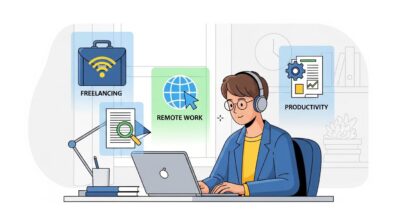
Remote hiring is entering a new phase. By 2026, employers will no longer rely only on resumes, certifications, or technical interviews. Instead, hiring managers will quietly evaluate a new category of abilities — the silent skills that determine whether a professional can truly succeed in a remote environment.
Why Remote Interviews Are Being Redefined
Remote work is no longer an experiment. Companies across industries are building permanent distributed teams and expanding hiring beyond borders.
This global shift has revealed a critical truth: strong technical talent does not always translate into strong remote performance.
According to research by McKinsey & Company, organizations are redesigning hiring strategies to assess adaptability, accountability, and collaboration in digital environments. McKinsey – Future of Remote Work
What Are Silent Skills in Remote Hiring?
Silent skills are behavioral and operational abilities that predict how well a professional performs without direct supervision. They are rarely listed in job descriptions, yet they strongly influence hiring decisions.
Employers assess these skills through behavioral questions, scenario discussions, written communication, and even how candidates manage interview scheduling and follow-ups.
The Silent Skills Employers Will Test in 2026
Remote interviews increasingly focus on six invisible capabilities that signal long-term success.
Self-Management and Accountability
Remote professionals must regulate their own productivity, deadlines, and focus. Employers look for evidence of discipline and consistency.
Time tracking platforms such as Toggl and Clockify are commonly referenced in performance evaluations. Toggl | Clockify
Asynchronous Communication Clarity
Distributed teams depend on written communication more than meetings. Hiring managers assess how clearly candidates express ideas without real-time conversation.
Modern asynchronous tools such as Slack and Notion support this workflow. Slack | Notion
Digital Emotional Intelligence
Remote collaboration requires empathy, tone awareness, and conflict management without face-to-face cues.
Harvard Business Review identifies emotional intelligence as a core predictor of leadership and remote team success. Harvard Business Review
Independent Problem-Solving
Remote professionals are expected to resolve issues before escalating them. Employers value decision-making confidence and analytical thinking.
This skill signals leadership readiness and reduces operational friction.
Focus and Distraction Control
Remote environments contain constant interruptions. Employers assess how candidates manage attention and maintain deep focus.
Research on deep work continues to influence productivity standards. Deep Work – Cal Newport
Learning Agility and Adaptability
Remote workflows evolve rapidly. Employers prioritize candidates who learn new tools and systems quickly.
LinkedIn’s Workplace Learning Report highlights adaptability as a top future career skill. LinkedIn Workplace Learning Report
How Employers Secretly Evaluate These Skills
Silent skills are rarely tested through formal exams. Instead, employers observe:
- Response clarity in written communication
- Problem-solving explanations
- Interview punctuality and preparation
- Professional follow-up messages
- Scenario-based reasoning
Even small behaviors often influence final hiring decisions.
How to Prepare for Silent Skill Interviews
Preparation goes beyond memorizing answers. Professionals must build daily systems that demonstrate remote readiness.
Design Structured Workflows
Project management platforms such as Asana and Trello help professionals organize priorities and meet deadlines.
Strengthen Written Communication
Clear writing is essential for reports, updates, and documentation.
Google Workspace supports collaborative writing and real-time editing. Google Workspace
Practice Behavioral Storytelling
Use structured methods such as the STAR technique to explain past experiences clearly.
Why Silent Skills Will Shape Career Growth
Remote professionals with strong silent skills advance faster, earn higher trust, and gain access to global leadership roles.
These abilities reduce supervision needs and improve long-term team performance.
This is why future-focused platforms such as Employ Digital emphasize remote-ready talent. Employ Digital
Final Thoughts: The Future Belongs to Invisible Excellence
The remote professionals of 2026 will be defined not by resumes, but by behavior.
Silent skills determine who thrives, who leads, and who builds sustainable remote careers.
Those who invest early in self-management, communication, and adaptability will shape the future of distributed work.