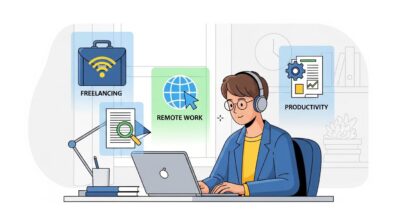
Remote work has permanently reshaped the modern workplace. What began as a temporary solution has evolved into a long-term operating model for companies worldwide. In 2026, the biggest transformation is not where people work, but how careers grow within remote environments.
Career progression, promotions, leadership opportunities, and professional visibility now follow different rules. Remote professionals who understand these changes are advancing faster, while others struggle despite strong performance.
This article explores how remote work is redefining career growth and what professionals must do differently to succeed in a remote-first world.
The Shift From Physical Presence to Digital Contribution
In traditional office settings, career growth was often influenced by physical presence. Being seen working late, participating in meetings, or having informal conversations with managers played a significant role in promotions.
Remote work removes these visibility cues entirely. Employers can no longer rely on physical signals to assess commitment or performance.
As a result, organizations are shifting toward contribution-based evaluation models. According to
Gartner, companies are increasingly measuring performance through outcomes, impact, and accountability rather than hours logged.
Why Traditional Career Ladders Are Breaking Down
The traditional career ladder assumed a linear path: junior roles leading to senior positions through tenure and proximity to leadership. Remote work challenges this structure.
In distributed teams, hierarchy is less visible, and advancement depends more on value creation than on job titles.
Professionals who cling to outdated promotion expectations may feel stalled, while those who adapt to fluid career paths find new growth opportunities.
What Career Growth Means in Remote Work Today
Career growth in remote work is no longer about being busy. It is about delivering consistent results, solving meaningful problems, and communicating impact clearly.
Impact Replaces Visibility
Remote professionals are evaluated based on outcomes rather than activity. Managers look for evidence of progress, improvements, and measurable success.
Those who document achievements and align work with business goals gain greater recognition in remote organizations.
Ownership Becomes a Key Growth Signal
Remote teams value individuals who take ownership of initiatives from start to finish. Ownership demonstrates reliability, leadership, and strategic thinking.
Professionals who consistently take responsibility beyond their job descriptions often advance faster in remote environments.
The Role of Communication in Remote Career Growth
Communication is one of the most critical drivers of career growth in remote work. Without clear communication, even high-quality work can go unnoticed.
Written communication, in particular, plays a central role. Emails, project updates, documentation, and reports now serve as permanent records of contribution.
According to
Harvard Business Review, professionals who communicate progress effectively are more likely to be trusted with leadership responsibilities in distributed teams.
How Promotions Work in Remote-First Organizations
Remote-first companies design promotion systems that prioritize fairness and transparency. Advancement is typically based on:
- Documented performance and results
- Ability to work independently
- Contribution to team efficiency
- Consistency over time
Rather than relying on subjective impressions, these organizations use structured performance data to guide promotion decisions.
What Remote Professionals Must Do Differently to Grow
Remote professionals must adopt a proactive approach to career development. Growth does not happen automatically in distributed environments.
- Track and document accomplishments regularly
- Share progress updates with stakeholders
- Develop strong asynchronous collaboration skills
- Seek feedback intentionally
- Align daily work with organizational goals
Intentional career management is essential for long-term success in remote roles.
Common Career Growth Mistakes in Remote Work
Despite increased flexibility, many professionals unknowingly limit their growth potential in remote work environments.
- Assuming performance will be automatically noticed
- Avoiding visibility through documentation
- Staying within narrow task boundaries
- Failing to communicate long-term impact
Recognizing and correcting these mistakes can significantly improve career progression in remote work.
How Companies Are Redesigning Career Growth Systems
Organizations are also adapting to remote work by redesigning career frameworks. Many are introducing:
- Clear performance metrics
- Written promotion criteria
- Quarterly growth reviews
- Skill-based advancement paths
The
World Economic Forum notes that future-ready companies emphasize transparency and skill development over rigid hierarchies.
The Long-Term Future of Career Growth in Remote Work
As remote work continues to mature, career growth will become more equitable and performance-driven. Geography, office politics, and physical presence will play a diminishing role.
Professionals who focus on impact, ownership, and communication will thrive regardless of location.
Remote work is not limiting career growth—it is redefining what growth truly means.
Conclusion
Remote work has fundamentally changed how careers are built. Success now depends on clarity, accountability, and measurable contribution rather than proximity to leadership.
Professionals who understand this shift and adapt their approach will find remote work not only sustainable, but powerful for long-term career growth.