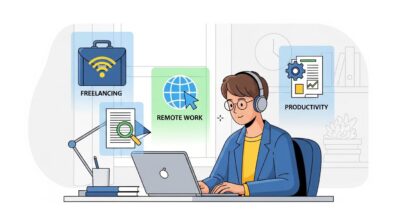
Remote hiring in 2026 is more advanced, data-driven, and behavior-focused than ever before. As organizations continue to operate globally, employers now evaluate far more than qualifications alone.
Today, companies assess how effectively candidates work independently, communicate across time zones, manage digital tools, and deliver measurable results without constant supervision.
According to research from Harvard Business Review https://hbr.org and workforce insights published by LinkedIn Talent Solutions https://business.linkedin.com/talent-solutions, modern employers increasingly prioritize performance behaviors, digital maturity, and emotional intelligence over traditional résumé signals.
For this reason, preparing strategically for remote interviews is no longer optional. Below are the most important remote interview questions in 2026 — along with structured example answers to help you stand out.
How Do You Structure Your Workday When Working Remotely?
What Employers Are Testing:
- Self-discipline
- Time management
- Output consistency
- Personal accountability
Example Answer:
“At the start of each day, I identify three priority outcomes instead of simply reviewing tasks. I then use time-blocking to schedule deep-focus sessions and collaboration windows. Typically, I reserve mornings for strategic or cognitively demanding work, while afternoons are dedicated to meetings and communication. Finally, I conduct a short end-of-day review to track progress and prepare for the next day.”
This approach demonstrates structure, ownership, and measurable productivity — all essential qualities in remote roles.
How Do You Handle Communication Across Different Time Zones?
What Employers Are Testing:
- Asynchronous communication skills
- Written clarity
- Documentation discipline
- Collaboration awareness
Example Answer:
“When collaborating across time zones, I prioritize structured written communication. For example, I clearly summarize context, decisions made, action steps, and deadlines. Additionally, I document key discussions so teammates can review them asynchronously. If a matter is urgent, I specify response expectations to reduce delays and maintain alignment.”
Such clarity reflects digital maturity and proactive collaboration.
Describe a Time You Solved a Problem Without Supervision.
What Employers Are Testing:
- Initiative
- Critical thinking
- Independent decision-making
- Ownership
Example Answer:
“During a remote client project, unclear requirements began slowing progress. Instead of waiting for direction, I reviewed past documentation, analyzed patterns, and drafted a revised scope proposal. After sharing it with the client for approval, we eliminated confusion and restored project momentum.”
Employers value professionals who take initiative and drive solutions independently.
How Do You Stay Focused While Working From Home?
What Employers Are Testing:
- Distraction management
- Energy control
- Work environment setup
- Discipline
Example Answer:
“To maintain focus, I use a dedicated workspace and structured work intervals of 45–50 minutes. During deep-focus sessions, I mute non-essential notifications and limit digital distractions. Moreover, I schedule short recovery breaks to maintain energy levels. By setting measurable daily goals, I ensure consistent output.”
This response signals responsibility and productivity discipline.
How Do You Give and Receive Feedback Remotely?
What Employers Are Testing:
- Emotional intelligence
- Professional tone
- Openness to improvement
Because tone can easily be misinterpreted in written communication, emotional intelligence becomes even more important in remote settings.
Harvard Business Review highlights emotional intelligence as a critical leadership skill in distributed workplaces: https://hbr.org/2015/01/emotional-intelligence-has-12-elements-which-do-you-have
Example Answer:
“When giving feedback remotely, I focus on clarity and constructive framing. I provide specific examples along with actionable suggestions. Similarly, when receiving feedback, I ask clarifying questions and confirm next steps to ensure alignment. I view feedback as a growth tool rather than criticism.”
This demonstrates maturity, adaptability, and professionalism.
What Tools Have You Used for Remote Collaboration?
What Employers Are Testing:
- Digital fluency
- Workflow integration
- Practical experience
- Tool adaptability
Today, common tools in remote workplaces include:
- Google Workspace
- Zoom
- Microsoft Teams
- Project management platforms
Official platforms:
Example Answer:
“I’ve used Google Workspace for collaborative documentation, Zoom and Microsoft Teams for structured communication, and project management platforms to track deliverables and deadlines. More importantly, I align these tools strategically to ensure clarity, accountability, and workflow efficiency.”
Employers look for practical experience — not just tool familiarity.
How Do You Measure Your Productivity?
What Employers Are Testing:
- Results orientation
- KPI awareness
- Accountability
- Performance tracking
Example Answer:
“I measure productivity based on deliverables and measurable outcomes rather than hours worked. Each week, I review performance indicators relevant to my role and compare them against targets. As a result, I maintain alignment with team objectives while continuously improving efficiency.”
In remote environments, output matters more than visible activity.
What Employers Are Really Evaluating (Even If They Don’t Say It)
- Clarity of communication
- Confidence without arrogance
- Structured thinking
- Digital professionalism
- Responsiveness
- Decision-making ability
Ultimately, remote interviews are behavioral evaluations disguised as conversations.
How to Prepare for a Remote Interview in 2026
- Prepare structured STAR-based examples
- Test your camera, audio, and internet connection
- Maintain confident eye contact and professional lighting
- Keep answers concise and outcome-driven
- Send a follow-up message within 24 hours
For evolving digital hiring standards and preparation strategies, explore: https://employdigital.com
You can also review global workforce trends from the World Economic Forum: https://www.weforum.org
Additionally, remote work insights are available from: https://www.gartner.com/en/human-resources
Final Thoughts
Remote interviews in 2026 extend far beyond answering questions correctly.
Instead, they serve as live demonstrations of:
- Autonomy
- Emotional intelligence
- Digital fluency
- Communication clarity
- Performance ownership
By preparing structured, measurable, and confident responses, you position yourself as a remote-ready professional.
In today’s competitive job market, preparation is not optional — it is your strategic advantage.